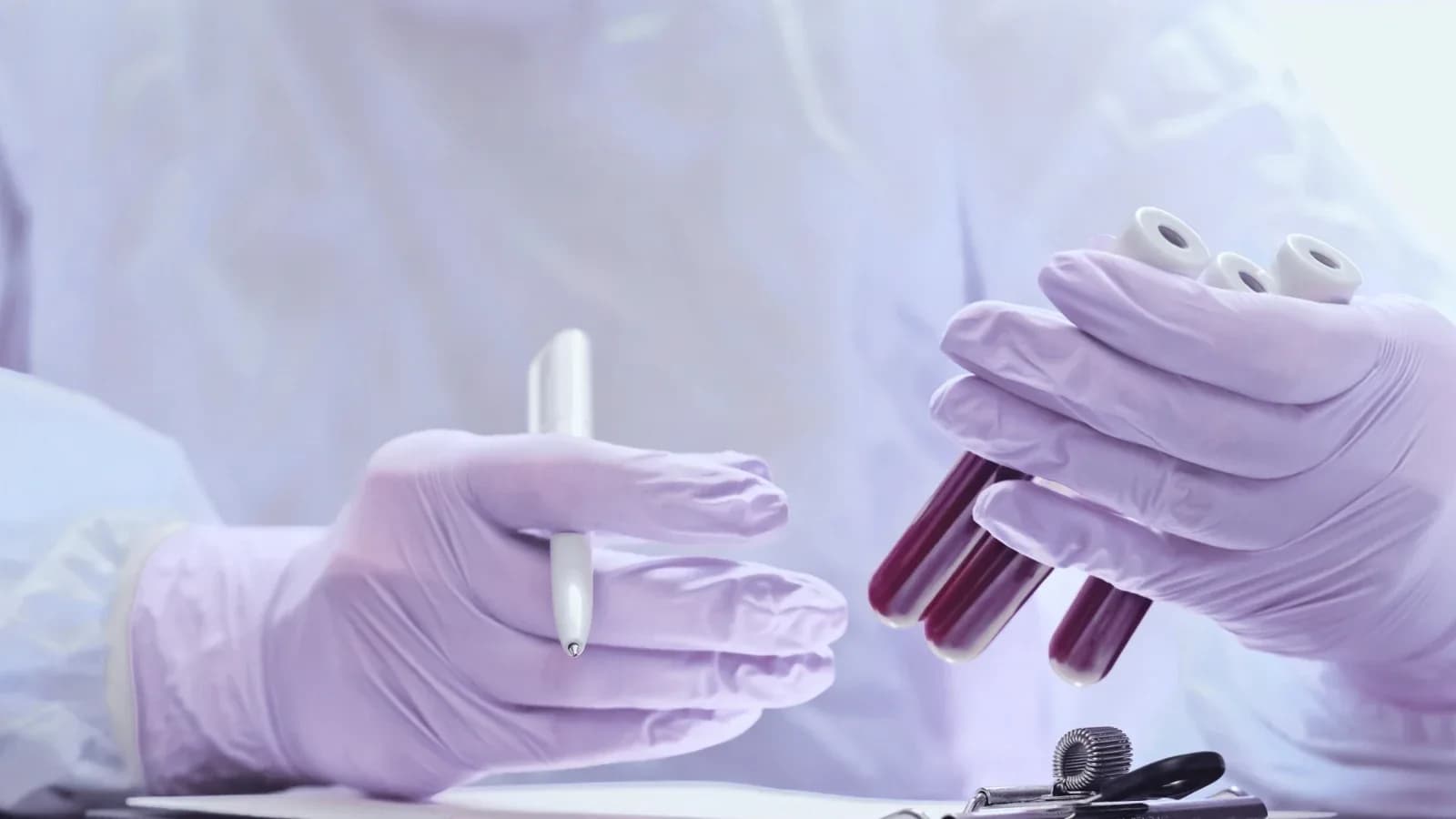
Non-invasive prenatal testing (NIPT) has transformed screening in pregnancy. It needs only a blood sample from you, carries no risk to your baby, and is much more accurate than older screening tests.
How does NIPT work?
During pregnancy, tiny fragments of DNA from the placenta, which usually match your baby’s DNA, circulate in your blood. NIPT counts these fragments to work out whether there may be an extra or missing copy of certain chromosomes.
What does NIPT screen for?
All three of our NIPT options screen for:
- Down’s syndrome (trisomy 21)
- Edwards’ syndrome (trisomy 18)
- Patau’s syndrome (trisomy 13)
- Sex chromosome conditions, such as Turner and Klinefelter syndromes
- Your baby’s sex, if you’d like to know
NIPT Advance and Absolute add screening for microdeletions, small missing pieces of chromosomes linked to specific conditions.
How accurate is NIPT?
NIPT detects over 99% of pregnancies affected by Down’s syndrome, with a very low false-positive rate. The NHS combined test (a blood test and nuchal translucency scan at 11–14 weeks) detects around 85–90%, with more false positives.
Even so, NIPT is a screening test, not a diagnosis. A high-chance result needs confirming with a diagnostic test such as CVS or amniocentesis before any decisions are made.
NIPT on the NHS vs privately
In England, the NHS offers NIPT as a second step if your combined screening shows a higher chance. Privately, you can have NIPT from 10 weeks as your first screening test, choose broader screening, and find out your baby’s sex at the same time.
When can I have NIPT?
From 10 weeks of pregnancy. Results take about 5 working days once your sample reaches the laboratory. Many parents pair NIPT with a 10 Week Scan for an early look at their baby’s development.
Which level should I choose?
| Standard | Advance | Absolute |
|---|---|---|---|
Trisomies 21, 18 and 13 | ✓ | ✓ | ✓ |
Sex chromosome conditions | ✓ | ✓ | ✓ |
Baby’s sex (optional) | ✓ | ✓ | ✓ |
6 common microdeletions |
| ✓ | ✓ |
92 microdeletions |
|
| ✓ |
Price | £295 | £345 | £425 |
If you’re unsure, Standard covers the most common conditions. If you have a family history of a genetic condition, talk to us or your midwife about whether Advance or Absolute is more suitable.
Frequently asked questions
Can NIPT be wrong?
Rarely. False positives and false negatives can happen, for example if the placenta’s DNA differs from the baby’s. That’s why a high-chance result is always confirmed with a diagnostic test.
Does NIPT work for twins?
NIPT can screen twin pregnancies for the main trisomies, though some options and sex chromosome results may be limited. Tell us if you’re expecting twins.