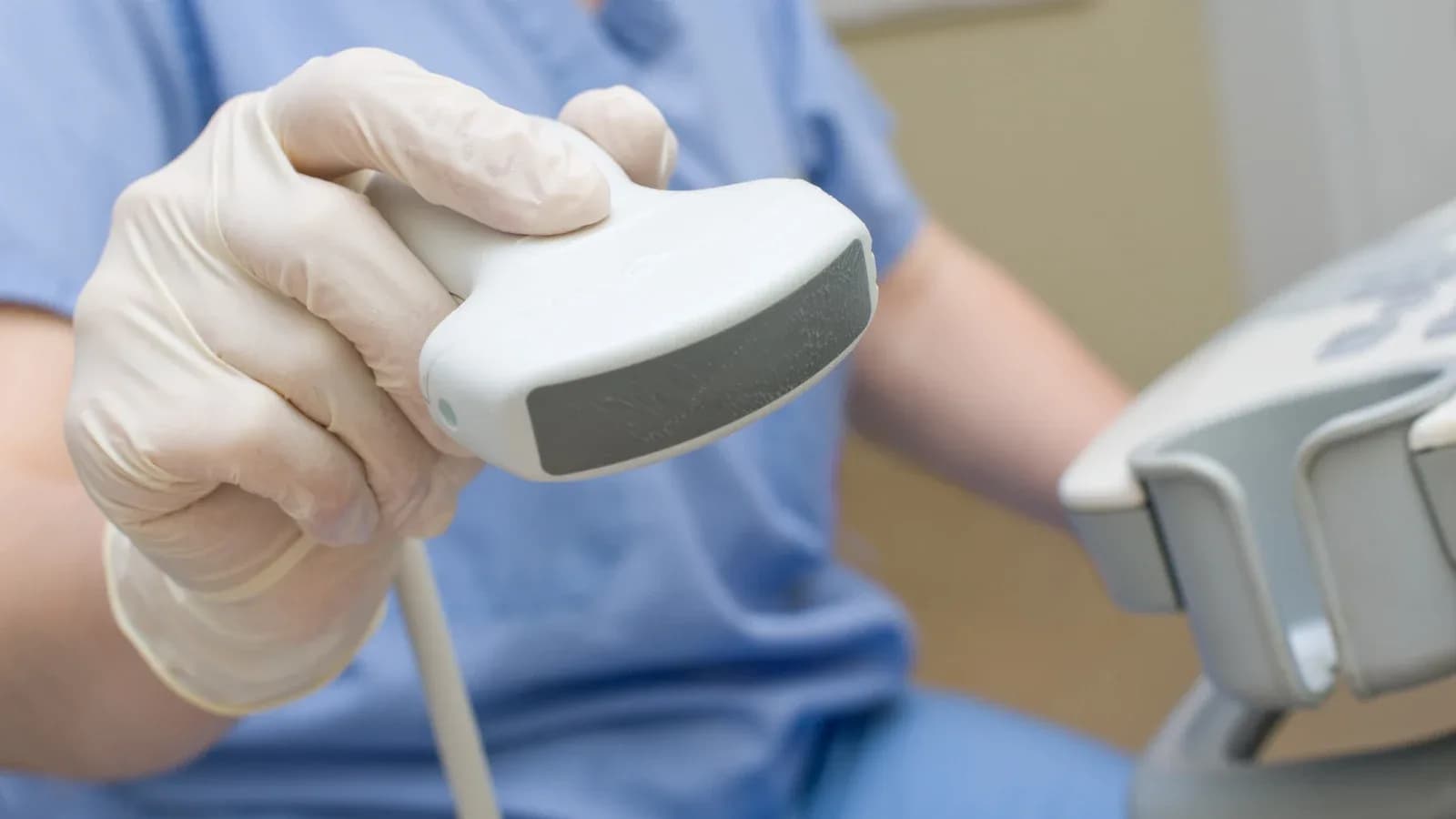

What an abdominal ultrasound can show
An abdominal ultrasound looks at the organs in your upper tummy and can help investigate:
- Gallstones and inflammation of the gallbladder
- Fatty liver and other liver changes
- Kidney stones, cysts and kidney size
- Cysts and lumps in solid organs
- Bladder problems
It’s often the first imaging test for tummy pain and abnormal liver blood tests. If you’ve had raised results on a liver function test, an ultrasound is a useful next step.
What’s included
- Ultrasound of the abdominal organs
- Explanation of findings
- Written report for your GP
Who it’s for
- Upper tummy pain or discomfort
- Suspected gallstones or kidney stones
- Abnormal liver blood tests or suspected fatty liver
- Monitoring a known condition, such as a cyst
How to prepare
- Don’t eat for about 6 hours before your scan; you can drink water.
- Arrive with a comfortably full bladder.
Abdominal Ultrasound Scan: your questions
Why do I need to fast before an abdominal ultrasound?
Fasting lets your gallbladder fill with bile so it can be seen clearly, and reduces gas in the bowel, which can block the view.
Information on this page is general and doesn’t replace advice from your GP, midwife or consultant. If you feel unwell or are worried about symptoms, contact your GP, call NHS 111 or, in an emergency, 999.