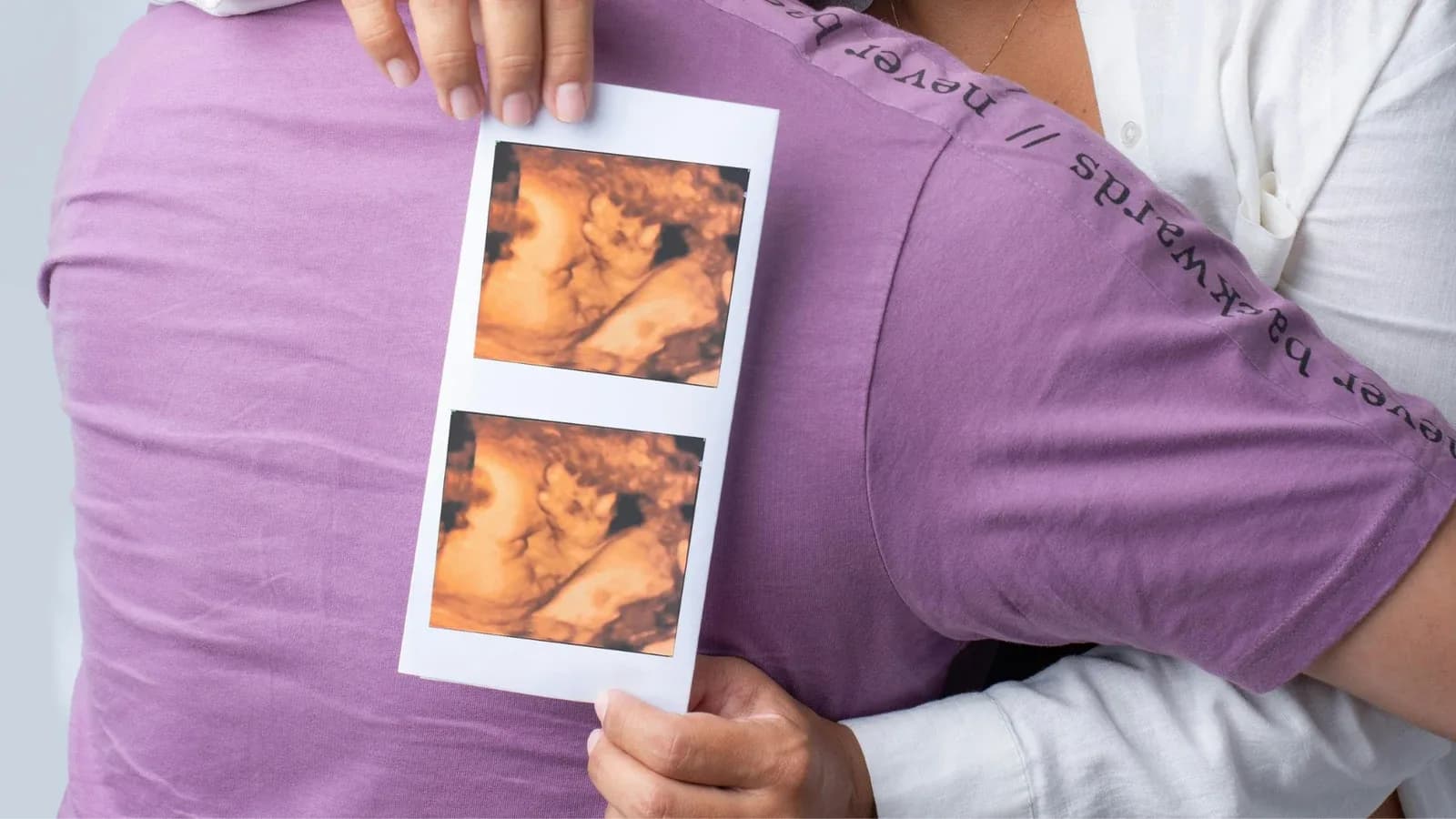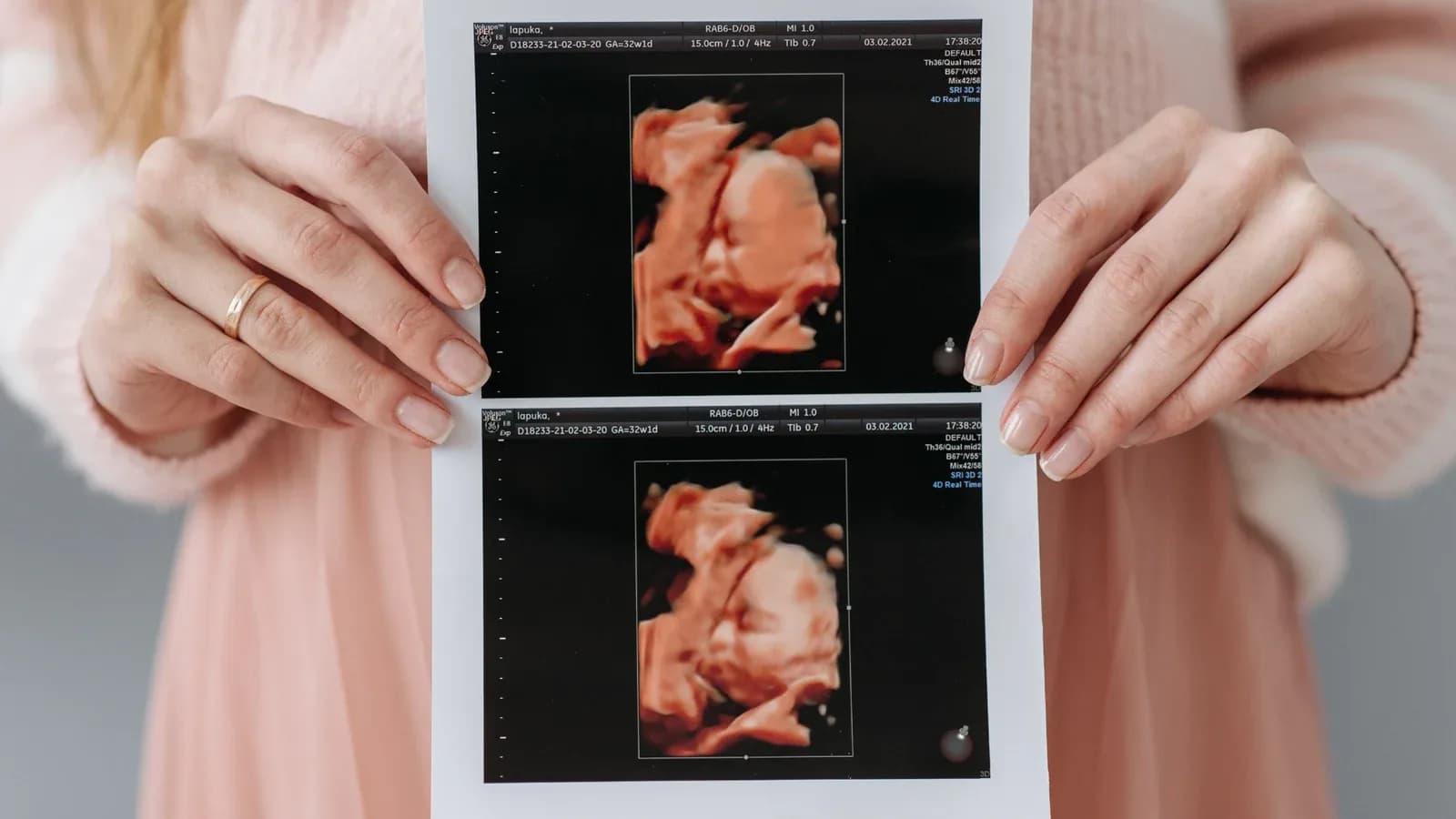

Is my baby head down?
Most babies settle head-down by around 36 weeks. Knowing your baby’s position and presentation helps you and your midwife plan for a safe birth.
What the scan shows
- Your baby’s presentation: head-down (cephalic), bottom or feet first (breech), or lying across (transverse)
- Your baby’s position: which way they’re facing
- Changes in position as your pregnancy progresses
If your baby is breech at 36 weeks, your NHS team may discuss options such as an ECV (gently turning the baby) or planning your birth.
You can add 4D imaging for a total of £95.
This is an elective reassurance scan, not a diagnostic examination. It does not replace your NHS scans or antenatal appointments. If we see anything that needs follow-up, we’ll explain it and advise you to contact your midwife, GP or maternity unit.
What’s included
- Baby’s presentation: head-down, breech or transverse
- Which way your baby is facing
- Complimentary gender confirmation
- 5–6 digital images
- Three black-and-white prints
- Detailed scan report
- Free re-scan if clinically required
Who it’s for
- Wondering if your baby has turned head-down
- Before discussing breech options with your midwife
- Monitoring changes in position late in pregnancy
How to prepare
- Arrive with a comfortably full bladder: drink 500ml–1 litre of water 30–45 minutes before and try not to empty your bladder.
- No hospital records, referral or GP notes are needed.
- Up to 5 guests are welcome, including children of any age.
Position & Presentation Scan: your questions
When do babies turn head down?
Most babies are head-down by 36 weeks, though some turn later. First babies often settle earlier than later babies.
Can I find out the gender at a presentation scan?
Yes. Gender confirmation is included at no extra cost if your baby’s position allows.
Information on this page is general and doesn’t replace advice from your GP, midwife or consultant. If you feel unwell or are worried about symptoms, contact your GP, call NHS 111 or, in an emergency, 999.