Why varicose veins happen
Leg veins have one-way valves that keep blood flowing up towards the heart. When the valves weaken, blood can flow backwards (venous reflux) and pool, stretching the veins. This causes varicose veins and symptoms such as aching, heaviness and swelling.
What the scan shows
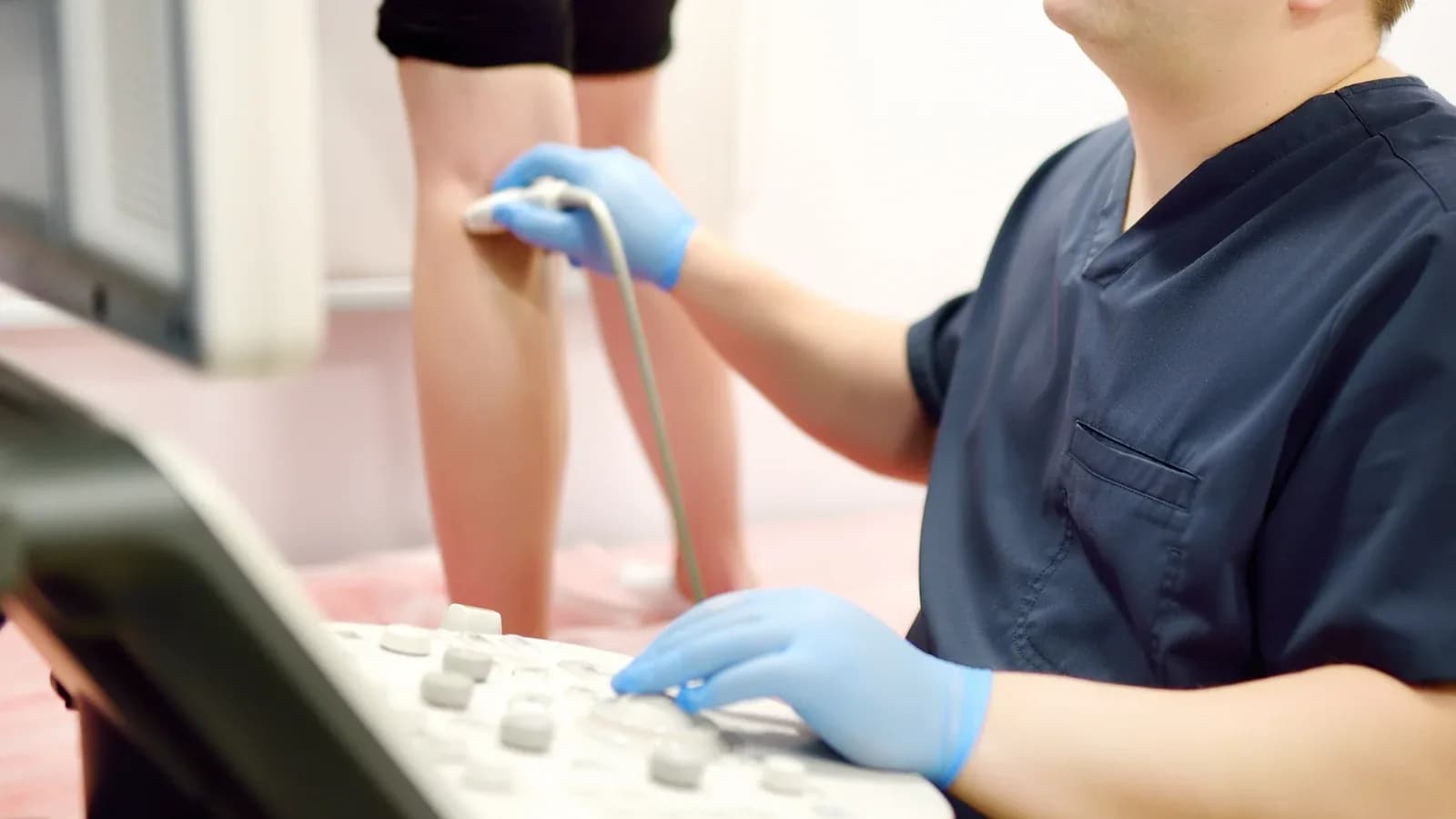
A venous duplex scan maps which veins are affected and how severe the reflux is. This is the scan vein specialists need before recommending treatment such as endovenous laser or radiofrequency ablation, foam sclerotherapy or surgery.
What’s included
- Doppler mapping of superficial and deep veins
- Assessment of venous reflux
- Written report to support treatment planning
Who it’s for
- Visible, bulging or twisted veins
- Heavy, aching or tired legs
- Ankle swelling or skin changes
- Planning varicose vein treatment
How to prepare
- Wear loose clothing. You’ll be scanned standing, so we can see how blood flows when the veins are under pressure.
Varicose Vein / Venous Insufficiency Scan: your questions
Do I need a scan before varicose vein treatment?
Yes. A venous duplex ultrasound is recommended before treatment to map the faulty veins and plan the right approach.
Information on this page is general and doesn’t replace advice from your GP, midwife or consultant. If you feel unwell or are worried about symptoms, contact your GP, call NHS 111 or, in an emergency, 999.