
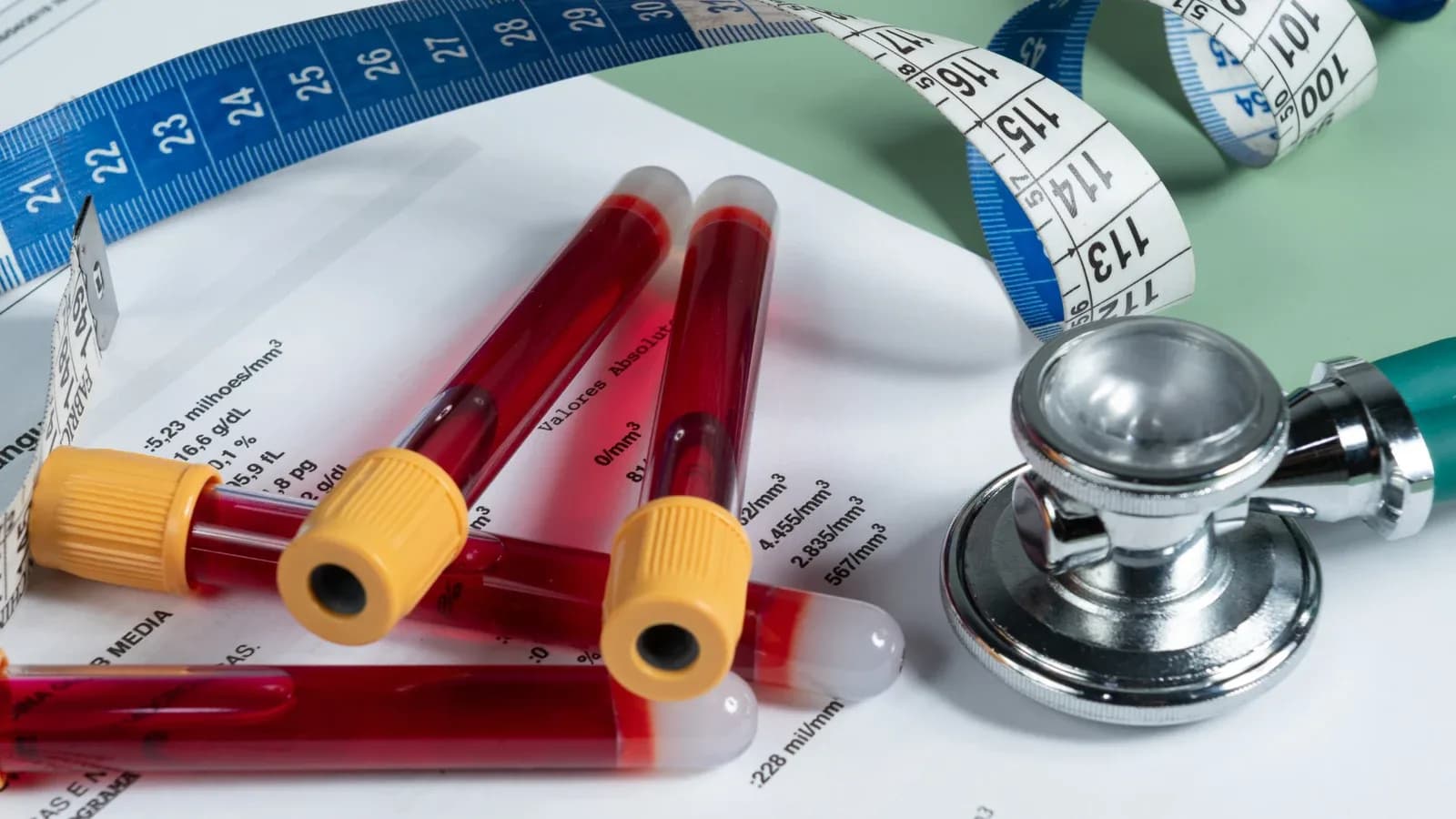
What it measures
- Haemoglobin
- Haematocrit
- Red blood cell count
- White blood cell count
- Platelets
- MCV
- MCH
- MCHC
What is a full blood count?
A full blood count (FBC) is one of the most common blood tests. It measures the three main types of cells in your blood:
- Red blood cells and haemoglobin, which carry oxygen. Low levels mean anaemia, a common cause of tiredness.
- White blood cells, which fight infection. Raised levels can point to infection or inflammation.
- Platelets, which help your blood clot.
The red cell indices (MCV, MCH and MCHC) describe the size and colour of your red cells, which helps narrow down the cause of any anaemia, such as low iron or low vitamin B12.
Does an FBC check my iron?
Not directly. An FBC can show signs of iron deficiency, but iron stores are measured by ferritin, which isn’t part of this test. If you’re worried about iron, call us and we’ll advise.
Who it’s for
- Tiredness, weakness or breathlessness
- Pale skin or feeling dizzy
- Frequent infections
- Easy bruising or heavy periods
How to prepare
- Drink plenty of water beforehand; it makes the sample quicker and easier to take.
- You don’t need to fast.
Full Blood Count (FBC): your questions
What can a full blood count detect?
It can show anaemia, signs of infection or inflammation, and problems with clotting cells. It’s often the first test when someone feels tired or unwell.
Do I need to fast for a full blood count?
No. You can eat and drink normally.
Information on this page is general and doesn’t replace advice from your GP, midwife or consultant. If you feel unwell or are worried about symptoms, contact your GP, call NHS 111 or, in an emergency, 999.